



 Black
Black White
White Grey
Grey Brown
Brown Red
Red Yellow
 Pink
Pink Skin Tones
 Orange
 Violet
 Green
Green Blue
Blue


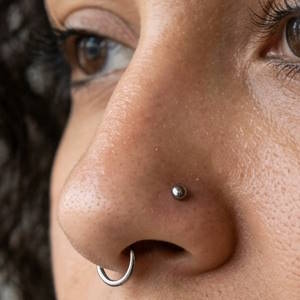


Nose Piercing - Versatile Jewelry for Your Face

The nose piercing is one of the most expressive piercings there is. It sits centrally on your face and significantly shapes your appearance. Whether subtle and elegant or bold and rebellious—the possibilities for adorning your nose are virtually endless. If you’re considering getting a nose piercing or are looking for new, high-quality jewelry, you’ll find all the important facts here about the different types, materials, and proper care.
What types of nose piercings are there?
Before you decide, you should familiarize yourself with the different placement options. Each location has its own specific considerations regarding healing and jewelry selection:
- Nostril piercing: The classic. It is pierced through the nostril. You can wear it on the left, right, or even on both sides (double nostril). It offers the widest selection of jewelry—from tiny rhinestones to rings.
- Septum piercing: This piercing is done through the nasal septum, more specifically through the soft tissue below the cartilage (the “sweet spot”). The septum is extremely versatile because you can fold the jewelry (e.g., a horseshoe) inward if needed, making it invisible.
- Bridge piercing: A horizontal piercing on the bridge of the nose between the eyes. It is classified as a surface piercing and is a true statement piece.
- and many more
The be-all and end-all: material compatibility and quality
Especially when it comes to facial piercings, the quality of the jewelry is crucial to avoid unsightly inflammation or scarring. You should particularly opt for the following materials:
- Titanium (G23): Titanium is the top choice for your new piercing. It contains no nickel, is extremely lightweight, and is exceptionally well-tolerated by the body.
- Surgical steel 316L: A durable and affordable option for piercings that have already fully healed.
Piercing, Pain, and Healing: What Can You Expect?
The piercing itself takes only a moment. While the septum is often considered relatively painless (if the "sweet spot" is hit), the nostril is slightly more noticeable due to the cartilage tissue. An experienced piercer uses sterile tools and a cannula to minimize stress on the tissue.
A nose piercing (nostril) usually heals within 2 to 4 months, though complete healing can often take up to 6 months or longer. Septum piercings heal faster, typically in 6–8 weeks. Healing depends heavily on aftercare, jewelry material, and individual healing ability.
Pro Tips for Aftercare
To ensure your nose piercing heals perfectly, you should incorporate these rules into your daily routine:
- Avoid unnecessary contact: Keep your hands off the jewelry! Bacteria on your hands are the number one cause of infection.
- Don’t pick at scabs: Soften scabs with a saline spray or a special piercing cleaner and gently remove them with a lint-free cloth.
- Be careful with cosmetics: Makeup, powder, and harsh facial cleansers have no place near the fresh piercing site.
- Don’t go swimming: Chlorinated and saltwater, as well as sauna visits, should be off-limits for at least 4 to 6 weeks.
Finding the right look
Whether you’re looking for a minimalist labret stud with a small ball, a segment ring clicker with zirconia, or a classic horseshoe ring (circular barbell)—your jewelry should highlight your personality. When purchasing, always make sure to choose the correct bar thickness (usually 1.0 mm or 1.2 mm) and the right diameter so that the jewelry neither pinches nor sits too loosely.