



 Black
Black White
White Grey
Grey Brown
Brown Red
Red Yellow
 Pink
Pink Skin Tones
 Orange
 Violet
 Green
Green Blue
Blue


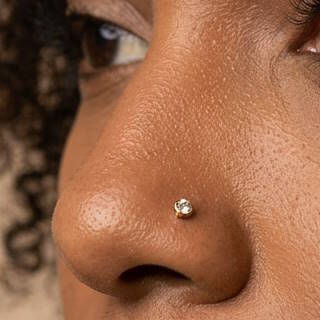


Nostril piercing: The timeless classic among nose piercings
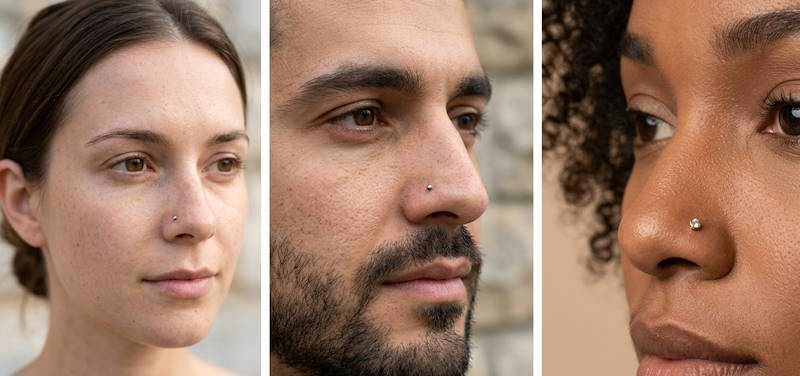
The nostril piercing is far more than just a current trend; it is one of the most historic and widely popular piercings in the world. If you’re thinking about getting a nostril piercing, you’re choosing a form of body jewelry that combines subtlety with personal expression like no other. In this category, you’ll find not only a huge selection of jewelry, but also all the important information you need to know about your nostril piercing.
What is a nostril piercing and where is it located?
The term is derived from the English word "nostril." Specifically, this piercing is placed through the side of the nostril. You can choose between the left and right sides—there’s no set rule here, whether anatomical or aesthetic; it all depends on your personal taste. One variation is the so-called “high nostril,” which, as the name suggests, is placed significantly higher on the bridge of the nose, sometimes in the cartilage.
The path to your nostril piercing: The procedure and pain factor
If you decide to get a nostril piercing, the first and most important step is choosing a professional piercing studio. An experienced piercer will thoroughly disinfect the area, discuss the optimal position with you, and mark it. The nostril is pierced using a sterile, single-use hollow needle. Contrary to persistent myths, you should never have a nose piercing “shot” with an ear piercing gun. This can damage the tissue and lead to inflammation or keloid formation.
The pain factor during the piercing is subjective. Most people experience the prick as a brief, sharp pain that subsides very quickly. Due to the many nerves in the nose, it’s completely normal for tears to well up in your eyes briefly—this is purely a reflex reaction and not a sign of extreme pain.
Healing and Proper Care
Patience is key after your appointment. A nostril piercing typically takes between 1 and 4 months to heal; in some cases, it can take up to a year for the piercing channel to fully stabilize. Since it is not cartilage tissue, this area heals about as quickly as an earlobe.
To ensure your piercing heals without any problems, proper care is crucial:
- Wash your hands: Never touch your fresh piercing with unwashed hands.
- Cleaning: Clean the area twice a day (inside and out) with a sterile saline solution or a special piercing care spray. Avoid harsh substances like alcohol or hydrogen peroxide, as these dry out and irritate the skin.
- Keep your hands off: Do not twist or move the jewelry unnecessarily in the piercing site.
- Be careful in daily life: Be careful when getting dressed and undressed, washing your hair, and sleeping so you don’t catch on the jewelry. Avoid swimming pools, saunas, and tanning beds for the first few weeks.
- Makeup break: Avoid applying makeup or moisturizer to the area around the piercing during the initial healing period.
Jewelry Guide: Ring or Stud?
For your first piercing, a professional piercer will almost always recommend a stud (often a labret stud or a special spiral nose stud). A stud sits more securely in the canal, whereas a ring moves around a lot and can carry bacteria into the wound, which significantly delays healing.
Once your nostril has fully healed, a whole world of styling possibilities opens up to you:
Nostril studs
Studs are ideal for a subtle look. They come in countless variations:
- Nose studs (Nose Bone): A straight post with a small ball at the end as a "clasp."
- Curved nose studs (L-shape): The post is bent into an L-shape, ensuring a secure fit.
- Nose screw: The jewelry has a small spiral at the end that nestles against the inside of the nose. They are considered particularly secure and unlikely to fall out.
Nostril Rings (Hoops & Seamless Rings)
Rings give the nostril a more striking look. It’s important to choose the right size (diameter and wire thickness) so the ring doesn’t pinch. Segment rings or clickers, which close seamlessly, are popular.
Materials
Always look for high-quality materials to prevent allergies.
- Titanium: The standard material for initial use, biocompatible and nickel-free.
- 316L surgical steel: The classic choice, suitable for healed piercings.